

Padel v Tennis: Similar Sports, Very Different Games
There’s a net, there are rackets, there’s the familiar rhythm of a rally. But spend a little time with each sport and the differences between padel and tennis become obvious - not just in how they’re played, but in how they feel. The two sports grew up in different worlds, and they ask different things of the people who play them.
Tennis remains the original benchmark racket sport. Its modern form took shape in England in the late nineteenth century, evolving from earlier European court games played by hand or with simple paddles. Over time it became formal, codified, and global. Grass lawns gave way to clay and hard courts, white clothing gave way to colour, and local clubs gave rise to packed stadiums and international stars. Tennis has always carried an individual edge: even in doubles, the sport tends to celebrate personal excellence and the ability to impose your game on an opponent.

Don Budge, winner of the first ever Grand Slam. June 28, 1938. Imagno—Getty Images
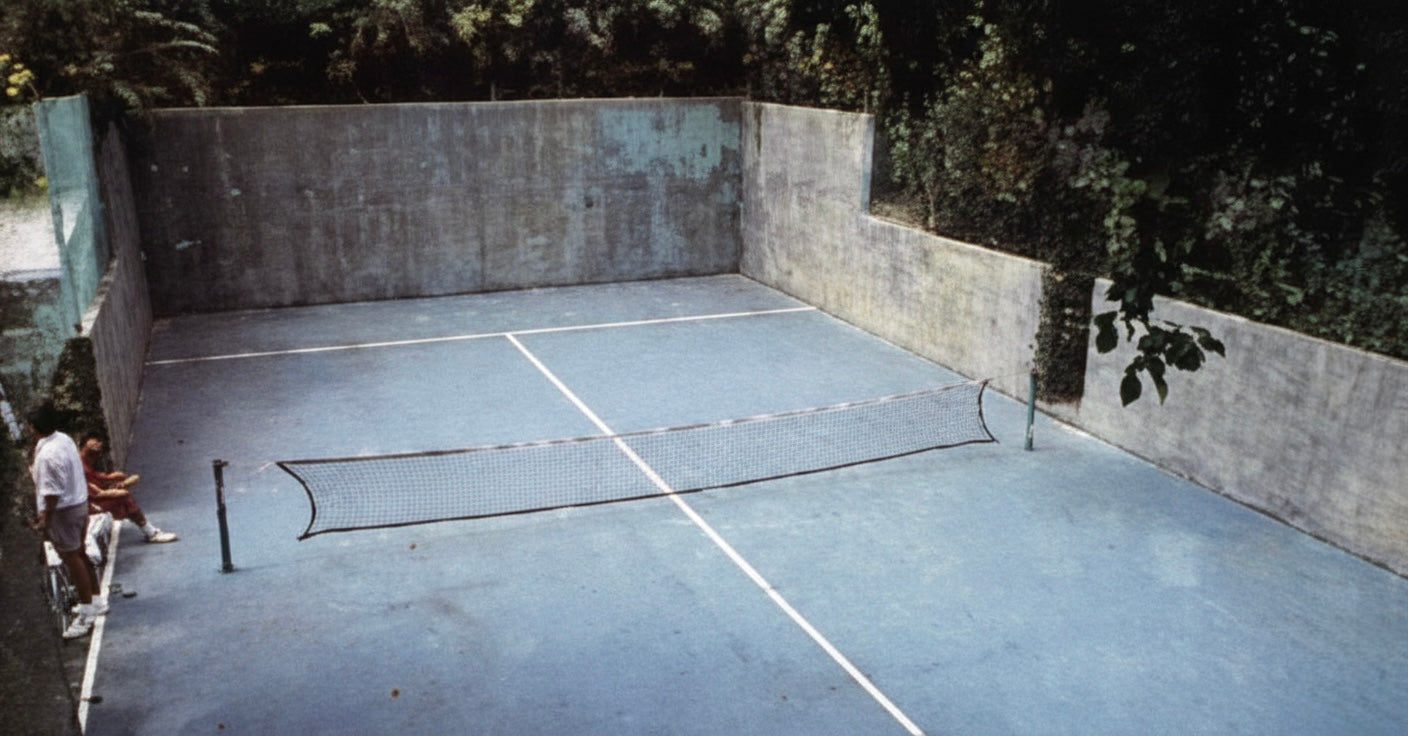
Padel, by contrast, has far humbler and more social origins. It was created almost by accident in 1969 in Mexico, when Enrique Corcuera adapted a small, enclosed tennis court to suit the confined space he had available. The walls were practical at first, but they quickly became central to the game. When padel reached Spain and Argentina in the 1970s, it found the perfect environment to thrive. The sport grew in clubs and communities rather than on show courts, and was formulated from the outset to be played in pairs. That sense of accessibility and shared experience is still one of padel’s defining traits.

The first ever padel court, created by Enrique Corcuera.
The courts themselves tell much of the story. A tennis court is wide, open, and exposed. There are no second chances once the ball is past you. Padel is played in a smaller, enclosed space, where glass and mesh walls keep the ball alive and rallies going. In tennis, the serve often dictates the point; in padel, the underhand serve simply starts the exchange. Power matters in both sports, but it dominates tennis far more. In padel, angles, touch, and patience are often more effective than brute force.
This difference shapes how each game is played. Tennis rewards aggressive shot-making and physical reach. A well-placed serve or a heavy forehand can end points quickly. Matches can swing on confidence and momentum, and the mental burden of playing alone is part of the challenge. Padel, on the other hand, is more conversational. Points develop gradually, with players using lobs, soft volleys, and the walls to move opponents out of position. Success depends heavily on communication with your partner and an understanding of space rather than speed.
The equipment reflects this philosophy. Tennis rackets are strung, relatively long, and designed to generate pace and spin. Padel rackets are shorter, solid, and perforated, prioritising control rather than power. The ball is similar but slightly less pressurised in padel, which helps sustain longer rallies and softer play near the net.

Even clothing and technology hint at cultural differences. Tennis fashion has long oscillated between tradition and innovation, from all-white Wimbledon kits to modern performance fabrics engineered for speed, breathability, and endurance over long matches. Padel clothing has evolved more casually, borrowing heavily from tennis and squash but leaning into comfort and mobility rather than formality.
Ultimately, neither sport is ‘better’ than the other; they simply offer different experiences. Tennis is about mastery, athleticism, and the ability to stand alone under pressure. Padel is about connection, creativity, and problem-solving in close quarters. One asks you to dominate the court; the other invites you to share it. And that, more than anything else, explains why so many players end up loving both - for very different reasons.
—
We’re often asked whether Oldan clothing performs beyond the padel court. The answer is simple: absolutely.
Every Oldan piece is created with versatility and longevity in mind. Crafted from lightweight, breathable, modern performance fabrics, our clothing is built to support high-level play across both padel and tennis.
From grass and clay to hard and artificial courts, enclosed by four walls or wide open, Oldan is designed to keep you comfortable, focused, and performing at your best, wherever you play.


Dejar un comentario
Este sitio está protegido por hCaptcha y se aplican la Política de privacidad de hCaptcha y los Términos del servicio.